


The Cape Coast Metropolitan Assembly has announced a series of measures, including the demolition of unsafe structures and the expansion of drainage infrastructure, following the devastating floods that claimed lives and displaced thousands of residents in June 2026.
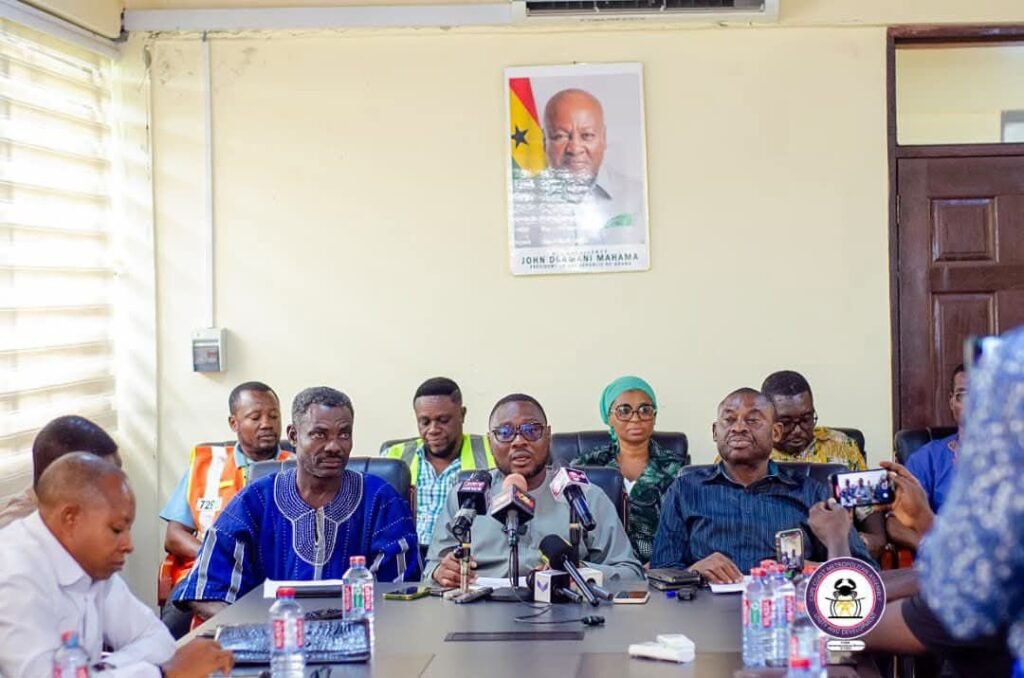
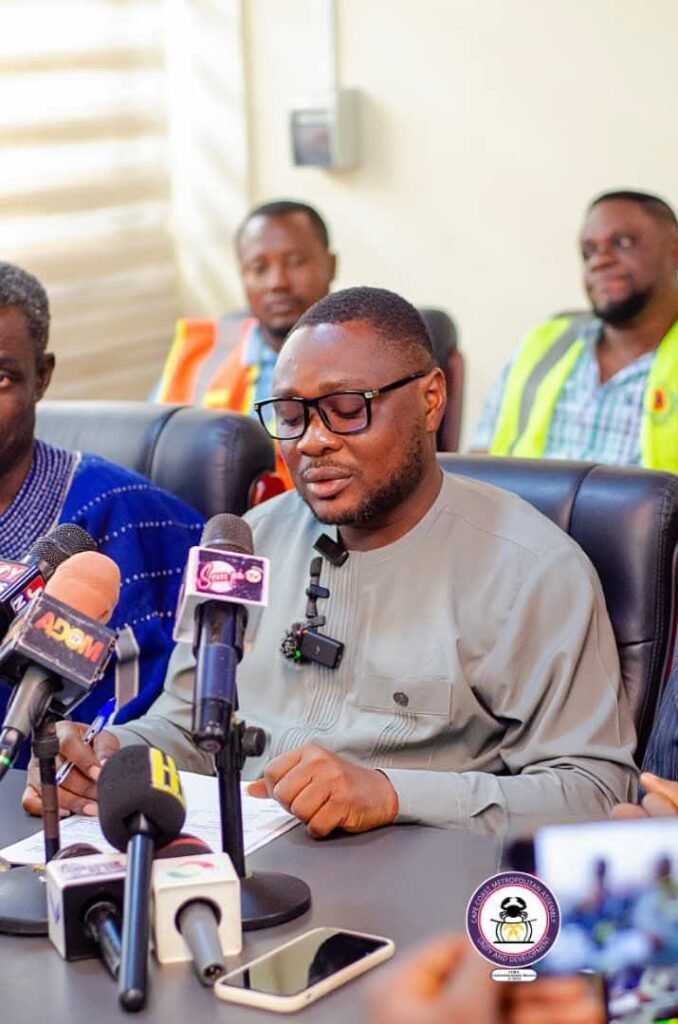
The announcement was made by the Metropolitan Chief Executive (MCE), Hon. George Justice Arthur, after a management meeting to assess the impact of the floods and outline strategies to prevent future disasters.
According to the MCE, heavy rainfall that began on Friday, June 19, 2026, at about 10:00 a.m. and lasted until approximately 5:00 p.m., with intermittent rains continuing through Sunday, June 21, triggered widespread flooding across the Cape Coast Metropolis.
Communities including Ekon, Abura, the University of Cape Coast and its environs, Ameen Sangari, DVLA/Nokaans, Eyifua, Mpeasem, Adisadel, Nkanfoa and Asenadze were among the hardest hit. Some areas that had never previously experienced flooding were also affected.
The disaster resulted in the collapse of ten houses, most of them old mud structures. Four people, including three children, lost their lives, while one person remains missing. Eight others sustained critical injuries and are receiving treatment at Ewim Polyclinic and the Cape Coast Teaching Hospital. A total of 2,929 residents were displaced by the floods.
The Assembly identified several factors that contributed to the flooding, including narrow drains due to the absence of a comprehensive drainage master plan, ageing mud buildings estimated to be between 100 and 250 years old, unauthorized structures erected on waterways, and the indiscriminate disposal of waste into drains.
As part of the response, two committees have been established. One will identify dilapidated buildings, assess the number of people living in them, identify suitable resettlement locations and develop funding proposals to support displaced residents. The second committee will identify structures built on waterways and walkways, verify development permits, plan the removal of illegal structures posing immediate risks and identify buildings suitable for restoration as tourism assets.
The Assembly also resolved to prepare a drainage master plan for the metropolis, undertake regular desilting of drains, expand existing drainage infrastructure, promote community participation in sanitation activities and embark on a massive decongestion exercise.
Hon. George Justice Arthur further highlighted interventions already undertaken after last year’s floods, including the expansion of the storm drain at Kru Town, desilting of drains in several flood-prone communities, demolition of unauthorized structures at selected locations, intensified public education on proper waste disposal and maintenance of ageing buildings, strict enforcement of sanitation by-laws and collaboration with the University of Cape Coast to provide technical expertise on waste management, flooding and decongestion.
The Metropolitan Assembly says it remains committed to implementing these interventions to reduce flooding, protect lives and safeguard property across the Cape Coast Metropolis.
Story written by DjQwequ Blogs


