


The match started badly for Bafana Bafana. Czechia came out aggressively, winning corners within the opening minutes and immediately putting the South African defense under pressure. Patrik Schick threatened early before Czechia’s pressure paid off in the 6th minute when Michal Sadílek finished from close range after being set up by Alexandr Sojka to give the hosts a 1-0 lead.
For much of the first half, South Africa struggled to create clear chances but gradually grew into the contest. Oswin Appollis, Aubrey Modiba, Iqraam Rayners, and Thapelo Maseko all had efforts blocked or off target. Teboho Mokoena tried his luck from distance on several occasions, while South Africa won a series of corners and free kicks. Czechia, however, remained dangerous on the counter and from set pieces. The first half ended 1-0 to Czechia, with South Africa having shown flashes of promise but lacking the finishing touch.
The second half saw a different South African side emerge. Ronwen Williams was called into action almost immediately, producing important saves from Lukáš Cerv and Patrik Schick to keep the deficit at one goal. South Africa responded with increased attacking intent. Mbekezeli Mbokazi, Aubrey Modiba, and Thapelo Maseko all tested the Czech defense, while the introduction of Relebohile Mofokeng injected pace and creativity into the attack.
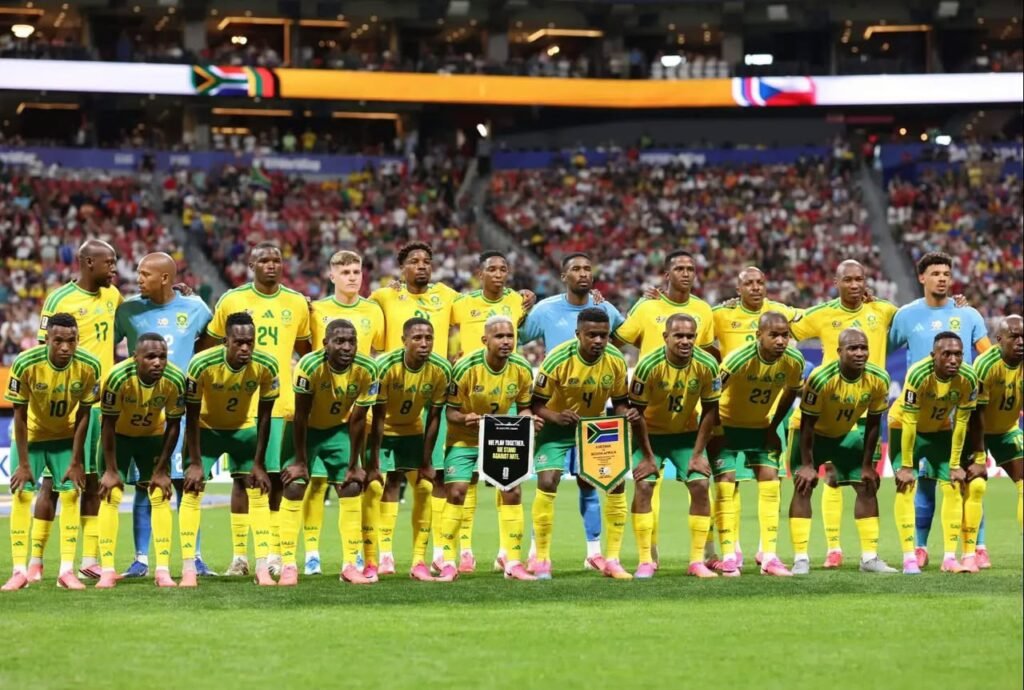
As the game progressed, South Africa became the more adventurous side. Evidence Makgopa came on and nearly equalized with a header that forced a save from Matej Kovář. Mofokeng also drew a fine save from the Czech goalkeeper. The pressure continued to mount and eventually produced a breakthrough in the 81st minute when Pavel Šulc handled the ball inside the penalty area. After the referee pointed to the spot, Teboho Mokoena stepped up in the 83rd minute and confidently dispatched the penalty into the bottom corner to make it 1-1.
The final stages belonged largely to South Africa. Mbokazi, Modiba, and Makgopa all had efforts blocked or saved, while Czechia relied on defensive interventions and the excellent goalkeeping of Kovář to preserve the draw. South Africa continued pushing through seven minutes of added time, winning corners and creating opportunities until the final whistle.
The statistics hidden within the match events tell an interesting story. Czechia started stronger and scored early, but South Africa finished stronger. The second half was characterized by repeated South African attacks, multiple saves by the Czech goalkeeper, several blocked shots, and sustained pressure around the Czech penalty area. Had South Africa shown the same intensity from the opening whistle, they might well have left with a victory.
For some African observers, there is an irony in South Africa’s result. Many of the loudest celebrations of Bafana Bafana’s comeback came from fellow Africans across the continent, despite the painful memories left by episodes of xenophobic violence directed at other Africans living in South Africa. One is reminded, tongue firmly in cheek, of James 5:16: “The prayer of a righteous man availeth much.” Judging by the comeback, perhaps the prayers of Africans availed much for Bafana Bafana tonight.
The Latin maxim nemo dat quod non habet—”no one gives what they do not have”—also comes to mind when reflecting on the broader conversation about African solidarity. A society that struggles to embrace fellow Africans may find it difficult to inspire reciprocal affection from the continent. Yet football has a way of transcending politics. On this occasion, many Africans who have criticized xenophobia still found themselves supporting South Africa’s national team.
Historically, the legacy of leaders such as P. W. Botha remains controversial because of policies that entrenched apartheid, exclusion, and division. Those policies cast a long shadow that continues to shape debates about identity, belonging, and social cohesion in modern South Africa. While those policies deserve criticism, the actions of past governments should not be used to diminish the contributions or worth of South Africans as a people.
On the field, however, the verdict was clear. South Africa conceded early, survived several Czech chances, gradually gained control, dominated much of the latter stages, earned a deserved penalty, and finished the match pressing for a winner. The final whistle confirmed a 1-1 draw, but the momentum, determination, and attacking intent in the closing stages belonged firmly to Bafana Bafana.


