


Across Africa, small and medium-sized enterprises (SMEs) are the quiet engines of economic life. They line the streets of our cities, anchor rural economies, innovate in emerging sectors, and employ the majority of the continent’s workforce.
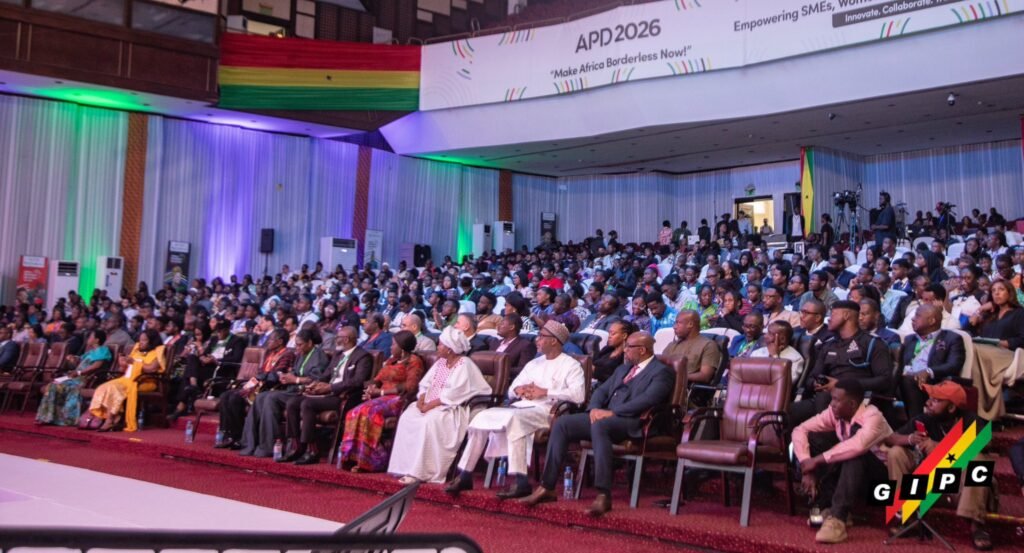
Yet despite their centrality, too many SMEs remain trapped in a cycle of informality, undercapitalization, and limited market access. Chief of Staff, Office of the President, Republic of Ghana, Julius Debrah’s assertion at the Africa Prosperity series captures a powerful truth: Africa’s next phase of economic transformation will not be driven solely by multinationals or extractive industries, but by scaling homegrown SMEs into continental champions.
In Ghana and across the continent, SMEs account for a significant share of employment and GDP. They are often the first point of entry into the labor market for young people and women, providing livelihoods where formal sector jobs are scarce. Beyond employment, SMEs stimulate local value chains, support innovation, and foster entrepreneurial culture.
However, most SMEs operate far below their potential. Structural barriers—limited access to finance, weak infrastructure, regulatory complexity, and fragmented markets—prevent them from scaling beyond local or national boundaries. As a result, Africa exports raw materials while importing finished goods, losing value, jobs, and opportunities along the way.
Scaling SMEs into continental champions requires a deliberate shift in mindset and policy. The goal is not merely to help businesses survive, but to enable them to compete, expand, and lead across African markets.
Continental champions are firms that can operate efficiently across borders, integrate into regional value chains, meet international standards, and leverage technology to scale. These businesses create quality jobs, invest in skills development, and anchor industrial ecosystems. When SMEs reach this level, their impact multiplies—transforming communities, industries, and national economies.
The African Continental Free Trade Area (AfCFTA) presents a historic opportunity in this regard. By creating a single market of over 1.3 billion people, AfCFTA lowers trade barriers and expands market access for African businesses. But SMEs can only benefit if they are supported to meet standards, access logistics, and navigate cross-border trade.
One of the most compelling arguments for scaling SMEs is their unmatched capacity for job creation. Large corporations, while important, are often capital-intensive and employ relatively fewer people. SMEs, by contrast, are labour-intensive and embedded in local economies.
As SMEs grow, they absorb young graduates, artisans, technicians, and informal workers transitioning into the formal economy. This is especially critical for Africa, where millions of young people enter the labour market each year. Scaling SMEs is not just an economic strategy—it is a social imperative to prevent unemployment, inequality, and social instability.
Moreover, strong SMEs promote inclusive growth. Women- and youth-led enterprises, when supported to scale, can challenge entrenched inequalities and broaden participation in economic life.
The COVID-19 pandemic and global economic shocks have highlighted the risks of overdependence on external supply chains and volatile commodity markets. Resilient economies are diversified economies—and SMEs are central to diversification.
By strengthening SMEs in manufacturing, agribusiness, technology, healthcare, and creative industries, countries like Ghana can reduce import dependence and withstand external shocks. Local production of essential goods, regional supply chains, and adaptive innovation all contribute to economic resilience.
Scaled SMEs also enhance fiscal resilience. As businesses formalize and grow, they expand the tax base, enabling governments to invest in infrastructure, education, and social services without excessive borrowing.
Turning SMEs into continental champions does not happen by chance. It requires intentional leadership, coordinated policy, and strong institutions. Governments must create an enabling environment through access to affordable finance, simplified regulations, infrastructure development, and targeted capacity building.
Public-private partnerships, development finance institutions, and innovation hubs all have critical roles to play. Equally important is policy consistency and political commitment. As Julius Debrah’s statement reflects, leadership at the highest level is essential to signal that SME development is a national priority, not an afterthought.
Ultimately, scaling SMEs is not about creating a few corporate success stories. It is about shared prosperity—growth that lifts communities, reduces inequality, and distributes opportunity more fairly.
When SMEs thrive, wealth circulates locally, supply chains deepen, and economic power becomes more inclusive. This is how growth translates into better living standards, stronger social cohesion, and national pride.
Africa’s future will be built by Africans, through African enterprises that can compete confidently on the continental and global stage. Julius Debrah’s vision speaks to a strategic truth: scaling SMEs into continental champions is one of the most effective ways to create jobs, build resilience, and achieve shared prosperity.