


In a symbolic gesture aimed at restoring dignity and unity in the conflict-stricken Bawku municipality, the Government of Ghana has announced plans to rebuild the statue of Zugraan Abugrago Azoka II, the revered Bawku Naba, which was destroyed during recent unrest.
The decision, confirmed by Defence Minister Dr. Edward Omane Boamah, follows widespread condemnation of the statue’s desecration and growing calls for justice from traditional leaders, civil society, and political figures.
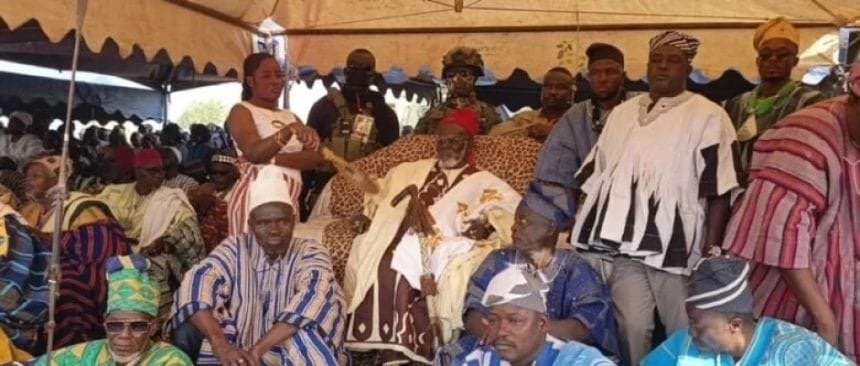
The statue, which stood as a cultural emblem of the Kusasi people and a symbol of peace and authority, was reportedly pulled down and set ablaze on July 13, 2025, during a violent escalation of the long-standing Bawku chieftaincy conflict.
The act sparked outrage across the Upper East Region, with many viewing it as a direct attack on the identity and heritage of the Kusaug Traditional Area.
The Bawku Naba statue was more than a physical structure, it represented historical continuity, resilience, and the hope for reconciliation in a region marred by decades of tension.
Its destruction was widely interpreted as a provocation, deepening mistrust between communities and raising questions about the role of security forces in the conflict.
Defence Minister Dr. Omane Boamah condemned the act as “regrettable and unacceptable,” assuring that the government would rebuild the monument and pursue justice. “Let us unite to uphold peace, protect tradition, and strengthen the bonds that hold our nation together,” he urged during a durbar at Burma Camp.
Meanwhile, executives of the National Democratic Congress (NDC) in the Kusaug Traditional Area described the burning of the statue as “a declaration of war.” At a press conference, they stated, “This government has not only failed to protect our people but has desecrated the image of our revered overlord… an act that is provocative and amounts to a declaration of war against the people of Kusaug”.
While the rebuilding effort is welcomed by many, it also underscores the urgent need for a comprehensive peace strategy in Bawku, one that goes beyond symbolic gestures to address the root causes of conflict, promote dialogue, and uphold justice.
As the nation watches closely, the restoration of the Bawku Naba statue may become a turning point in Ghana’s pursuit of unity through cultural preservation and inclusive governance.
Story Written By Prince Asante Kwarteng | Kobby Kyei News