


As global tensions in the Middle East continue to disrupt energy markets, Ghana is being urged to accelerate its transition to renewable energy and electric mobility, with business leader Dr. Jerry Darwin warning that the country’s heavy dependence on fossil fuels is becoming increasingly unsustainable.
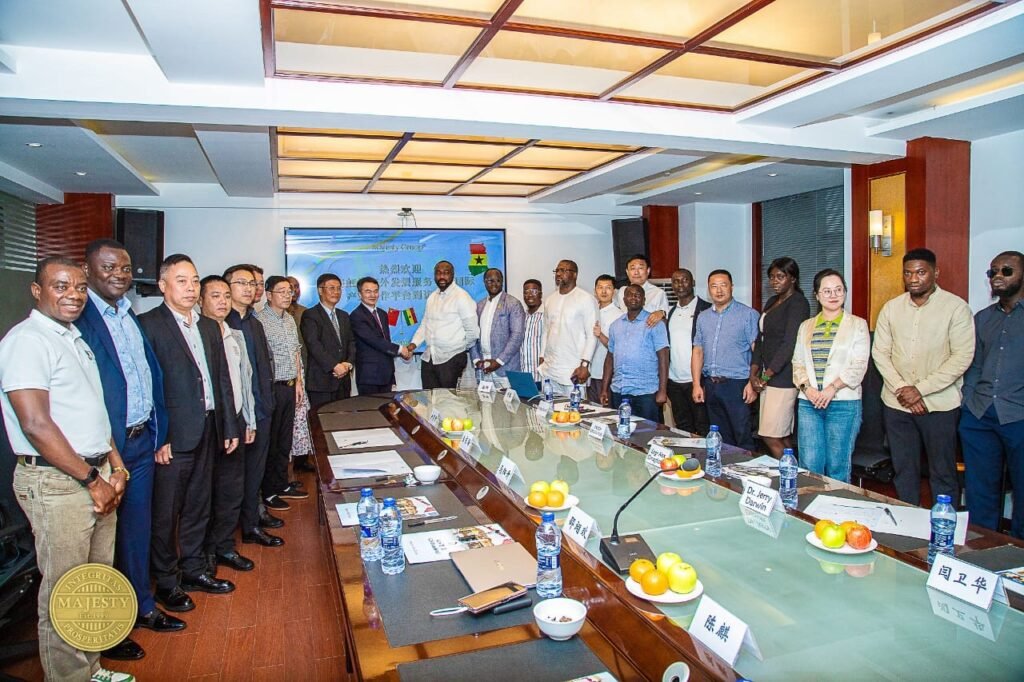
Speaking in an interview with journalists in Accra, the Founder of Majesty Groupe called on government, investors and private sector players to scale up investments in solar energy and electric vehicles (EVs) as a strategic response to rising fuel prices triggered by the ongoing US–Israel–Iran conflict.
“Ghana cannot continue to rely heavily on imported fuel in a world where geopolitical tensions can determine our economic stability overnight,” Dr. Darwin stated. “This is the time to aggressively invest in solar energy and electric vehicles. It is no longer an option, but a necessity.”
The call comes against the backdrop of a growing global energy crisis. Recent reports indicate that disruptions in oil and gas shipments through key global routes are already impacting African economies, leading to fuel shortages and price spikes across several countries.
For Ghana, which depends significantly on imported petroleum products, such shocks translate directly into higher transport costs, inflationary pressure and increased cost of living.
“Every increase in fuel prices affects transport fares, food prices and business operations,” Dr. Darwin noted. “If we don’t act now, we will continue to import inflation.”
Despite abundant sunshine, Ghana’s renewable energy penetration remains minimal. Solar and wind currently account for less than 1% of total power generation, highlighting a significant gap between potential and actual deployment.
Across Africa, however, momentum is building. According to Reuters, the continent installed 4.5 gigawatts of solar capacity in 2025, representing a 54% increase year-on-year, driven by falling technology costs and policy support.
To Dr. Darwin, Ghana is well-positioned to benefit from this trend. “We are blessed with sunlight all year round. Solar energy can power homes, businesses and even transportation if we make the right investments,” he emphasized.
Ghana is already making modest strides in electric mobility. By early 2024, the country had approximately 17,000 electric vehicles on its roads, but only seven public charging stations, all located in Accra, according to EV24 Africa estimates.
The government has set ambitious targets, aiming for 35% EV adoption by 2035 and 70% by 2045, but challenges remain.
Across Africa, the EV market is expanding rapidly, projected to grow from $17.4 billion in 2025 to $28 billion by 2030, though it still accounts for less than 1% of vehicles on the road.
“The opportunity is massive,” Dr. Darwin said. “But we need infrastructure, financing and strong policy support to unlock it.” “We must address affordability and infrastructure simultaneously,” Dr. Darwin stressed. “Otherwise, adoption will remain slow.”
Dr. Darwin believes Ghana must act decisively by encouraging local manufacturing, offering tax incentives, and supporting public-private partnerships in clean energy.
“We should not wait until fuel becomes unbearable before we act. The future is electric and solar. Ghana must position itself now to lead in West Africa,” he said.
He further urged financial institutions to develop innovative financing models to make EVs and solar systems accessible to ordinary Ghanaians. “This is not just about energy. It is about economic resilience, job creation and national security.”
As global energy uncertainties persist, Ghana’s transition to cleaner, more sustainable alternatives may no longer be a matter of choice but survival.
With the right mix of policy, investment and innovation, the country could turn today’s fuel crisis into an opportunity for long-term transformation.
“Every crisis presents an opportunity,” Dr. Darwin concluded. “This is Ghana’s opportunity to break free from fossil fuel dependency and build a cleaner, stronger economy.”
Story written by D. Deladem Kisseih


