


It is often said that prevention is better than cure. Yet in Ghana, and particularly in Accra, we have perfected the opposite approach: we wait for problems to spiral out of control before reacting, even when those problems were clearly visible and easily preventable.
In recent months, one undeniable reality in Accra is that almost everyone appears to be a seller. This observation is not an attack on entrepreneurship—far from it. The private sector, when properly regulated by the state, remains the backbone of every functional economy. That is how much of the Western world developed. The real issue in Accra is not what people sell, but where they sell it.
Anyone who has walked through the Central Business District, Kwame Nkrumah Circle, Madina, or nearly any major intersection understands this reality. Structures emerge overnight on roads, bus stops, pedestrian walkways, waterways, and even within active traffic lanes, all in the name of commerce. Spaces designed for movement have become makeshift markets. Pedestrian walkways are no longer for pedestrians; they are occupied by vendors selling fruits, clothes, phone accessories, and every imaginable item.
Beyond the visual disorder lies a deeper discomfort. Street trading has become one of the major contributors to waste on our streets. More troubling, however, is the daily experience of navigating pathways that have been completely overtaken by traders. Vendors cross into one’s path with goods, push items into people’s hands, and in some cases fling products at passersby as a form of “marketing.”
For women, the experience can be especially distressing. Unwanted touching, harassment, and blatant disrespect are not uncommon. And if one dares to complain, the resistance and verbal abuse that often follow can be overwhelming.
At moments like these, difficult questions arise. Are there no authorities responsible for managing these spaces? Who is paid to ensure order in our city? Who approves these structures—or do they simply appear unseen? And perhaps most troubling of all: is this how Accra will always be?
Anyone who has lived in or walked through the city can relate. Yet the most puzzling aspect of this situation is the contradiction at its core. The same city authorities mandated to regulate these activities are often seen collecting taxes from the very vendors occupying illegal spaces.
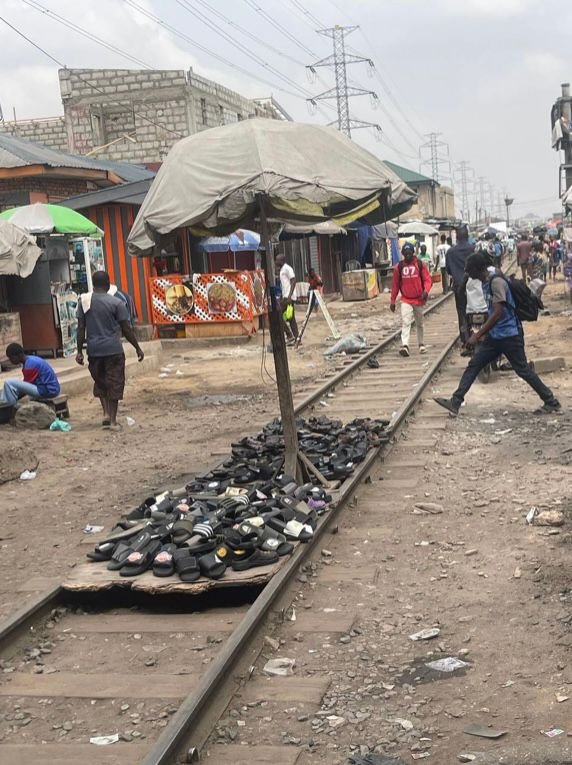
In April 2025, I personally witnessed the Accra Metropolitan Assembly (AMA) attempting to decongest some of these areas by drawing red lines and, in certain cases, nearly engaging in physical confrontations with traders. This raises an uncomfortable question: if decongestion is the “cure,” why allow the problem to fester in the first place? Why permit traders to convert streets into markets only to later evict them forcefully?
Footbridges designed to save lives are now lined with goods for sale. Naturally, vendors refuse to move because this is their source of income. But have our leaders fully considered the danger of traders running into traffic when the lights turn green? Have we reflected on the risks posed to drivers, pedestrians, and the sellers themselves?
This is not a problem that requires complex empirical research to understand. Its dangers—and its solutions—are plain to see. We often compare ourselves to cities in the so-called Global North, describing their citizens as disciplined and law-abiding. That comparison is misleading. People everywhere break rules when it is easy to do so. The difference lies in continuous monitoring and strict, consistent enforcement.
The solutions are not complicated. Street vendors must be relocated to designated markets. Yes, there will be resistance, but sustained enforcement will eventually leave no alternative. The public must be educated on the dangers of buying and selling in traffic. Street trading in traffic zones should be made explicitly illegal, backed by clear and enforceable monetary sanctions. Above all, new encroachments must be prevented before they take root.
If we truly aspire to an Accra that is clean, safe, and well-organized, we must be willing to make bold—and sometimes inconvenient—decisions, especially when rules are being clearly violated. As the saying goes, “prevention is better than cure.” It is time we lived by it, not merely repeated it, by preventing chaos before it becomes unmanageable.
Article and Image by: Mfah Amadu Barrister


